
Best places to live in Malta
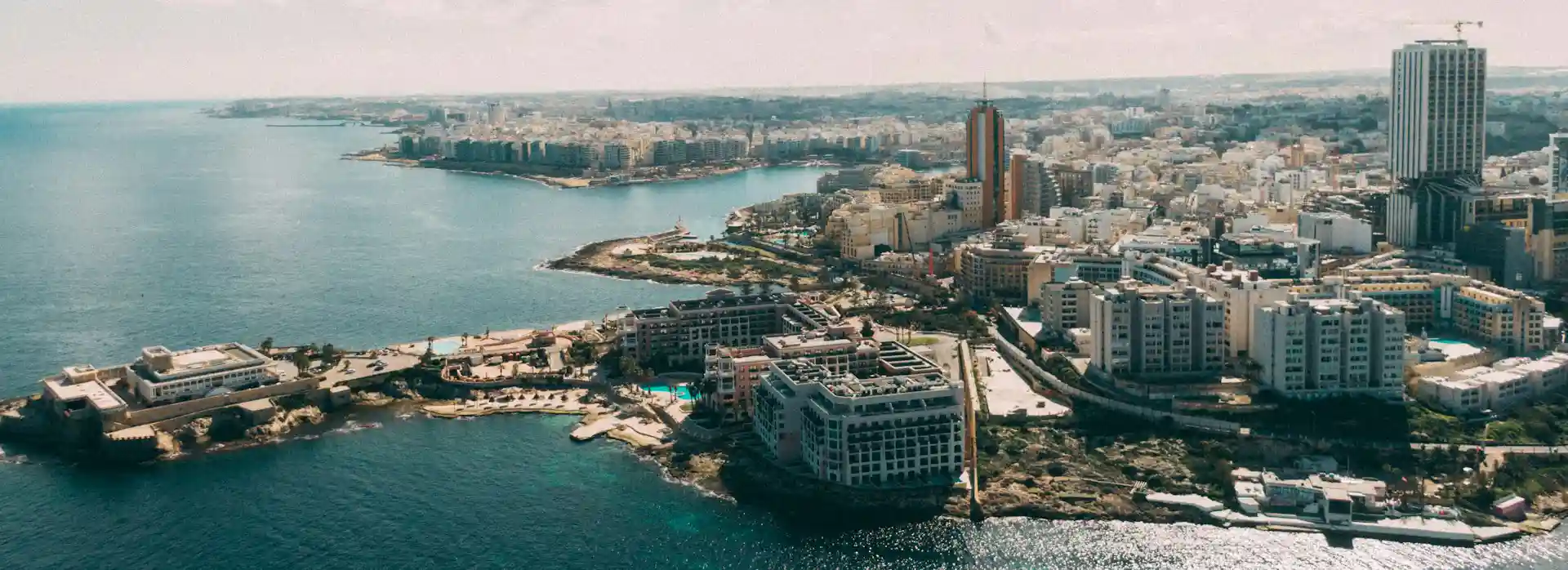
A youngster and a family man will have different needs and different wants. Therefore, the same location that works for some will make no sense for others. When considering a place to live in Malta, it’s better to choose a place that suits your lifestyle rather than going with a template.
See our latest jobs for Malta opportunities!
Best Places to Live in Malta for Young Foreign Professionals
Most professionals search for a house that’s near their workspace. In case you have recently been hired by an iGaming company. You want to go out on a Friday, you work long hours, you want to be close to the office, and you don’t want to take a 45-minute bus ride home; you need a house that’s near the main hubs of Malta. For good reason, the majority of those in such circumstances wind up in these places.
Sliema, St Julian’s, and Gzira
The coastal areas of Malta are the favorites of the expat population. The beaches, bars, restaurants, fitness centers, and more serve as the main attraction. Moreover, St. Julian’s is home to Paceville, one of Malta’s most sought-after neighborhoods. Depending on how you feel about nightlife, this location might or might not be the most desirable aspect of getting a home here. Sliema has fantastic shopping options, a long beach route, and a quieter, residential vibe. Discreetly situated between the two, Gzira feels cozier, is less lavish, offers a view of the marina, and has less rent than neighboring areas.
This corridor is next to the majority of Malta’s iGaming offices. You could actually walk to work if your employer is in Tigné, SmartCity, or any other area of Sliema/St. Julian’s.
Perks of living here: You can walk to work and socialize. Here you get the island’s finest bar and restaurant scene. There is a robust expat community, so you won’t have to start from zero. You get good bus connections at night.
Cons: This area is on the expensive side. However, the facilities it offers justify it. Summertime traffic is a unique type of misery. Living 200 meters away from Paceville on a Friday night isn’t exactly pleasant for everyone.
Rent: If you are looking at a studio in this area, you will usually be paying somewhere between €950 and €1,200 a month. A one-bedroom place bumps that up a bit, typically falling in the €1,100 to €1,600 range. But this depends on the exact location and condition.
Prices typically start at about €1,500 for anything bigger, like a two-bedroom in Sliema or St. Julian’s. However, rentals can rise rapidly, sometimes reaching €2,500 or more, when you include features like a view of the sea or a more recent, contemporary interior.
Msida and Birkirkara
Msida and Birkirkara are not that glamorous. While nobody relocates to Malta with Msida in mind, this place is worth considering. If you are smart enough, you will definitely land here.
Msida is close to the port and Mater Dei Hospital, and it’s a ten-minute walk from Gzira. It is popular among professionals, medical professionals, and university employees who seek quick access to everything without having to pay such high costs as in Sliema. Birkirkara is a larger, more modern Maltese town with all the daily infrastructure you want, including pharmacies and supermarkets. The best part is Malta’s transport system, which efficiently supports Msida and Birkirkara.
Perks of living here: Msida and Birkirkara are significantly less expensive than Sliema. You get amazing, excellent bus connections: St. Julian’s, Valletta, and Sliema are all accessible without a car. The harbor area is actually walkable from Msida. Overall, everything you need is available in Birkirkara without the tourist markup.
Cons: You won’t get that crazy nightlife. After a few weeks, Msida may seem small. Street parking in Birkirkara is a never-ending low-level conflict. There isn’t much of an organized expat social scene in either location. You will have to look for it on your own.
Rent: Rent at Msida Studios ranges from €700 to €900 per month. Apartments with one bedroom cost between €850 and €1,100 per month. Similar rates apply in Birkirkara: one bed usually costs €750-€1,000 per month, while two beds cost €1,000-€1,300 per month.
Best Places to Live in Malta for Families
When you are living with your family, the dynamics change. To comfortably live, you need proper space. Ideally, you need multiple rooms, a garden, and a location that’s nearby to schools, hospitals, and markets.
Here are some of the best places to live in Malta for families:
Sweiqi
Swieqi is the community that developed next to Paceville without transforming into Paceville. It features a ton of newer apartment buildings, is hilly, peaceful, and actually close to St. Julian’s without crowds or high cost. Many middle-aged and older foreign professionals who have families reside here. It’s relatively new and a bit anonymous, so it doesn’t have much character, but it does the job.
Perks of living here: Close to everything you need. Also, it’s pretty quiet and residential. There are good schools close by and more contemporary housing stock than in many places. Supermarkets and private clinics are easily accessible.
Cons of living here: Dependent on a car. The public transport is a bit weak. Depending on where you are, walking to a Swieqi bus station can take some time. You won’t get much of a town center vibe.
Rent: Apartments with two bedrooms usually cost between €1,300 and €1,800 per month. You may have to spend €1,600–€2,200 per month for three bedrooms.
Naxxar
Naxxar will give you the vibe of typical Malta. It’s an ancient city with local eateries, a parish church that dominates the skyline, and a lovely central piazza. It lies between the island’s geographic center and the coast; that’s why it’s more central than you may think. But this place is too ideal for families, and that’s why when families relocate here, they usually stay. Longer-term foreigners who have passed past the “I want to be near Paceville” phase and simply want a decent place to live are drawn to it.
Perks of living here: This place is undoubtedly less expensive than coastal regions. It has a community, shops, and cafes, giving it a true town atmosphere. It is pretty good for families who don’t want to live in an expat bubble and want to truly experience Maltese life. There are more roomy maisonettes and apartments available in this place.
Cons: A car is something mandatory here for travel. Bus connections exist but are less frequent than in central areas. If you want to get to Sliema or St. Julian’s, it may take a long time.
Rent: A two-bedroom apartment usually costs between €1,000 and €1,400 per month. Bigger townhouses or maisonettes cost between €1,200 and €1,700 per month.
Pembroke
Want a distinct residential feel in Malta? Pembroke can be the place for you. It’s modern and well-equipped. Moreover, this place is much closer to the sea, and the best part? It’s not a popular tourist spot. So, you won’t get those crowded streets and beaches. It’s even quieter than Swieqi.
Perks of living here: It’s pretty quiet. It seems authentically suburban in a positive way. The place is near a few good schools. There is less traffic than on the St. Julian’s Belt. That’s why it’s ideal for families that need peace but don’t want to feel stuck.
Cons of living here: It’s a compact area with not much happening. There aren’t many places to eat and shop that are accessible on foot. The majority of daily chores still require a car.
Rent: You have to spend €1,200–€1,600 per month for two bedrooms. Monthly rates for three-bedrooms range from €1,500 to €2,000.
Best Places to Live in Malta for Quiet Living
Peace, if that’s the only thing you want, Malta won’t disappoint you. If you want slow mornings, a sea view, local cafes, and more, here are the best areas to live in Malta:
Mellieħa
Perched on a hill above Malta’s finest sandy beach, Mellieħa is located in the northernmost point of the main island. It’s a pretty beautiful place to live in. Even with the flood of tourists throughout the summer, it doesn’t feel as packed as Sliema or Valletta. It’s so peaceful outside of summer that it occasionally feels like the island has been turned off.
Overall, it’s a respectable town. Here, you get everything from a large parish church, supermarkets, pharmacies, and dining spaces to a functioning community. That’s why people who like peace love this place. Also, it’s a favorite among remote workers. It’s especially popular among individuals who don’t want to be close to an iGaming workplace.
Perks of living here: This space offers a beautiful setting. The best beach in Malta is essentially right next door. It is less expensive than popular expat destinations along the coast. Families will benefit from accessible, secure, and large schools.
Cons: If you are commuting, being far from Sliema and the iGaming belt is a major problem. Although there are bus links, the trip is long. You will require a car or a personal vehicle.
Rent: Apartments with one bedroom cost between €750 and €1,000 per month. You may have to pay €950–€1,300 per month for two bedrooms.
Gozo
Gozo is a different island. From peace’s perspective, this can be amazing. But if we look at it realistically, for professionals, it can cause blunders. The distance can be a big matter since there is just one method to get to the working space of Malta, a ferry from Ċirkewwa, which takes about 25 minutes to cross. The main island lost much of its rural character decades ago, but Gozo is slower, smaller, greener, and more rustic.
We can call it one of the best places to live in Malta for the crowd that loves peace. There are people that work in Malta and reside in Gozo. The ferry plus bus or car on the opposite side makes the commute extremely taxing.
Perks of living: By far, this is the most peaceful choice in Malta. It comes with a gorgeous countryside, diving, farmhouses, and a truly unique way of life. The best part? Rents are significantly lower than those in mainland Malta. Also, it has a close-knit community of foreigners.
Cons: The ferry dependence is real. It’s okay until it’s canceled due to inclement weather, you miss the last one, or you have to do it every day. Moreover, you get a restricted nightlife.
Rent: Among the Maltese islands, this one is the most reasonably priced. You can get apartments with one bedroom that cost between €600 and €850 per month. You may have to spend €750–€1,100 per month for two bedrooms.
Best Places to Live in Malta for Culture and Scenic Living
Do you wake up to something beautiful every day? A touch of Mother Nature? You can choose locations in Malta that are close to nature. But remember, there is a true trade-off: they are not very residential, they are crowded with tourists during the summer, and everyday life can occasionally feel theatrical, much like living in a museum area.
If nature is something that attracts you, here is the list of places to live in Malta:
Valletta
Valletta is a UNESCO World Heritage Site, and this distinguishes it from the majority of the cities in Malta. It’s a beautiful place. But remember, it’s often jam-packed with tourists. Overall, it’s a small area in the EU with barely 7,000 residents. So, if you want to be a part of a small community, this place is best for you.
Perks of living here: A beautiful place to live. Stroll to theaters, museums, and cultural events. It takes five minutes to get to Sliema via ferry. You get amazing bus connections from City Gate’s main terminal.
Cons: Not so much a neighborhood as it is a tourist destination. During the summer, it might be noisy in groups. There are very few supermarkets.
Rent: One-bedroom apartment rent ranges from €900 to €1,300 per month. You may have to pay around €1,200–€1,800 per month for two bedrooms.
Floriana
Located just outside Valletta’s walls, Floriana is a sometimes-overlooked option. It’s quieter, has a large botanical garden, and functions more like a residential neighborhood.
Pros: This place is super close to Valletta, with much of the same access. It’s also quieter. You see large green spaces and direct bus connections everywhere.
Cons: Very quiet in the evenings and weekends.
Rent: 1-bedroom apartments usually cost between €850 and €1,200 a month.
Where to Live in Malta According to Commute Time?
|
Place |
Bus |
Car |
|
Gozo |
Ferry and drive – 120 min |
Ferry and drive – 120 min |
|
Mellieħa |
55-75 minutes |
25-30 minutes |
|
Valletta |
25-35 minutes |
10-15 minutes |
|
Naxxar |
25-35 minutes |
15-20 minutes |
|
Pembroke |
20-30 minutes |
10-15 minutes |
|
Swieqi |
15-25 minutes |
10-15 minutes |
|
Birkirkara |
30-45 minutes |
20-30 minutes |
|
Msida |
15-30 minutes |
15-20 minutes |
Worst Places to Live in Malta
Now you know where to live in Malta. But to make you extra aware, let’s cover the worst places to live in Malta so that you don’t land in the wrong spot.
We won’t just name any place and quote it as the worst. To be frank, “worst” is pretty subjective. Something you won’t like may come under the best places to live in Malta for your friend. Nevertheless, there are a few places that come up frequently when expats are honest about places they wouldn’t return to.
Hamrun is frequently mentioned in this list. It’s a gritty, inland working-class town that some find genuine, while others think it’s just outdated. The housing stock is older, the streets are narrow, and it lacks the amenities and transportation links necessary to compete with neighborhoods like Birkirkara or Msida.
The industrial south of Malta, which includes Marsaxlokk, Zejtun, and more, has some lovely locations but also poses a significant logistical burden to anyone employed in the northern part of the island. There is less infrastructure for expats, there are few bus links to Valletta and Sliema, and travel times are lengthy.
How to Choose the Best Area to Live in Malta?
Well, you start by listing down your priorities and then aligning them with the options you have. Here’s what you should look into when choosing where to live in Malta.
Let’s begin with the rent. The rental market in Malta has no upper limit. So, you need to decide on your budget and move accordingly. You get both options. Either you can pay €800 for an apartment in Birkirkara or choose a €3,000 penthouse in Sliema. It depends on your budget.
The next thing you should check is the proximity to your office or workspace. You can’t choose a house that’s miles away from your workspace. While the rooms or apartments close to the major office can be pricey, we recommend picking something in between.
Next, consider transportation. Do you own a car or do you plan to purchase one? If so, you have a lot more possibilities. Stay near Valletta, Sliema, or the main bus corridors if you are depending on buses. Public transportation in Malta is free for locals and serves the majority of the country. Nonetheless, there are significant differences in frequency and dependability between central and outlying districts.
Lastly, what do you really do when you are not working? Being in or close to Sliema or St. Julian’s will save you recurring Bolt or Uber fares if you are frequent to restaurants, pubs, and the beach. It makes little sense to pay a premium for Sliema if you have children, work remotely, or simply want a peaceful living.
Frequently Asked Questions
Q1) What is the best area in Malta for expats generally?
Answer: Young professionals like Sliema and St. Julian’s because they are social, walkable, and near workplaces. Families are more suited for Swieqi and Naxxar.
Q2) Where do most iGaming employees live in Malta?
Ans: The bulk are concentrated in Sliema, St. Julian’s, Gökira, Swieqi, and Msida, all of which are easily accessible from the main office hubs. Once they settle in and begin to prioritize space above closeness, senior professionals frequently relocate to Swieqi or Naxxar.
Q3) Are there genuinely bad areas to avoid in Malta?
Ans: Overall, Malta is a very safe island. So, there are no truly dangerous regions. In terms of amenities and character, Òamrun and portions of the industrial south are less desirable.
Q4) Is Gozo worth living in if you work in Malta?
Ans: Only if you are able to negotiate flexible schedules or work remotely. The daily ferry ride from Gozo to Malta is tiresome every day, yet sometimes manageable.
Q5) Is it better to live in a central or quieter area of Malta?
Answer: Depending on your personality and line of work. Convenience and social life are available in central regions, although they are more expensive and noisier. On the other hand, although there are some issues in commutes, quieter places offer space and tranquility at a reduced cost.