
Pros and cons of living in Malta
Malta is definitely not a place of wonders. Each place has trade-offs. What you believe as heaven can be a big rock for someone else. So, in case you are planning to shift to Malta, let’s break down the pros and cons of this country. In this article, we will clearly discuss the pros of living in Malta and also the cons of living in Malta, so that you can make the right choice.
See our latest jobs for Malta opportunities!
Pros of Living in Malta
Here are the perks Malta offers you if you choose to live here:
The Weather
The weather in Malta is the number one reason why people love this country. You get sunshine in this country 300 days annually. In January, the temperature falls to a range between 12 and 15 degrees Celsius. While for outsiders this temperature offers a soothing point, for the Maltese, this is cold. You get early spring in Malta. No matter whether it’s May or November, the sea is warm enough for a swim. You will definitely love it.
Summers, however, brings up a whole new story. If you are not accustomed to Mediterranean heat, you will have to spend two months indoors with the air conditioner running because of July and August. The temperature here can reach around 40 degrees with peak humidity.
English Is Everywhere
Only two EU nations, Ireland and Malta, have English as their official language. For relocation, this is a great advantage. Without learning a single word of Maltese, you can do your household chores. You can go to the doctor, set up a bank account, argue with your landlord, understand official correspondence, and go about your everyday life.
The majority of residents, particularly the younger generation and those employed in the hospitality, iGaming, or financial industries, speak English proficiently. You can go weeks without hearing any Maltese in some areas of the island, especially in close proximity to Sliema and St. Julian’s.
This eliminates a whole layer of stress that expats in Spain or Germany endure for years when they relocate from the UK, US, Australia, or any other English-speaking nation.
It’s Actually Secure
We can call Malta one of the safest European countries. There are very few cases of violent crimes. Most European towns do not benefit from the same low level of threat.
There aren’t any actual “no-go zones.” Even the places with a tougher reputation, which do exist, are rough in a dilapidated sense rather than a dangerous one. This is a common excuse given by expats with children for staying out longer than anticipated. You are able to relax in a manner that is just not possible in most cities.
Access to the EU and All of Its Neighbors
Malta is a complete member of the EU. It’s more important than it appears. Residents can take advantage of EU employment rights and consumer protections, travel freely throughout the Schengen Area, and use the EHIC card to access healthcare throughout Europe. Being headquartered in an EU-regulated state gives professional weight that non-EU locales cannot match if you’re pursuing a career in fintech or iGaming.
This is frequently the main draw for non-EU citizens. You can enter the biggest single market in the world with a Maltese residency visa.
The Shorelines
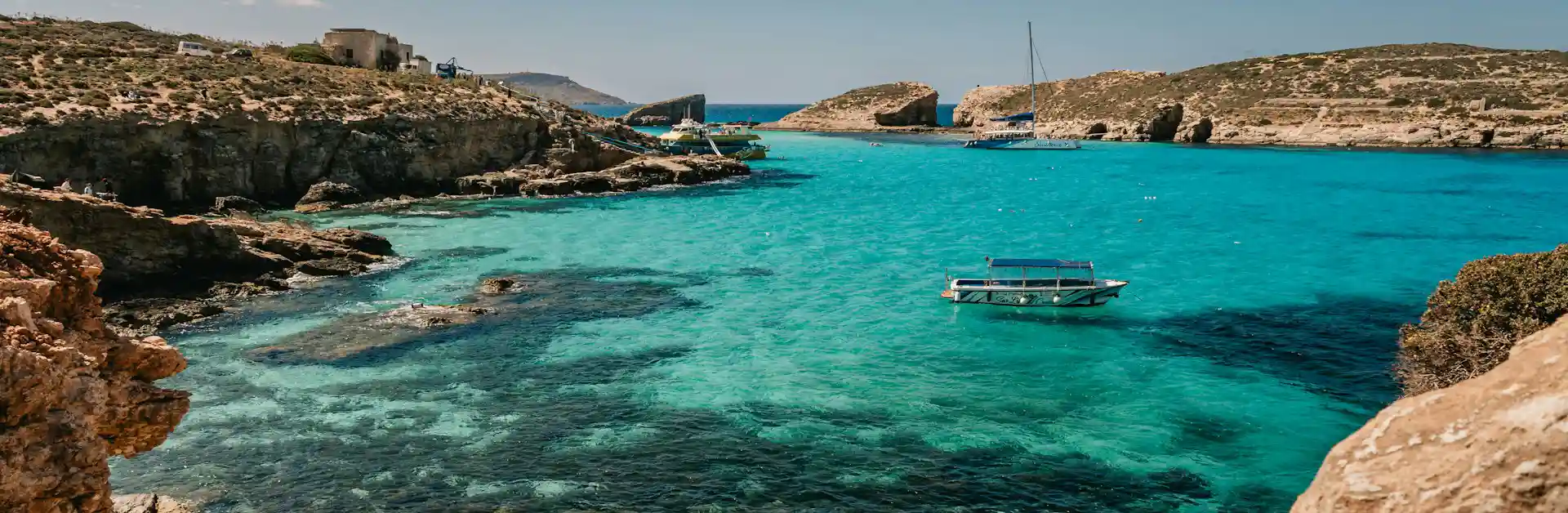
There are parts of Malta’s coastline that are truly breathtaking, with glistening water, striking cliffs, and secret coves. One of the few sandy beaches on the island is Mellie’a Bay. One of such locations that truly resembles the pictures is the Blue Lagoon on Comino. All year long, excellent scuba diving and open-water swimming facilities are available.
People don’t often realize how different the shoreline is. Sandy beaches in the north, rocky swimming platforms, and protected bays in the south. You can locate where you belong and claim it as your own. This is more than simply a nice-to-have for those who truly enjoy being close to the water.
The Nightlife
Malta’s primary center for nightlife is Paceville in St. Julian’s, and it’s just incredible. Here, you are never far from the next location because clubs, bars, and restaurants are all packed into a tight area and open late.
Over the past ten years, Valletta gained a strong culinary and bar culture outside of Paceville. Sliema features rooftop bars, and Strait Street in particular evolved from a desolate area to one of the more intriguing avenues in the Med. Gozo is known for its summertime feasts and more subdued festivities. The social calendar is truly packed, especially during the summer.
Tax
One of the primary reasons large companies choose to set up in Malta is the country’s tax system, and the same reasoning applies to individuals. Professionals in iGaming, technology, and finance may be able to reduce income tax to a flat 15% thanks to qualifying employment regulations. For high earners relocating from countries with 40–50% marginal tax rates, this is life-changing money.
The typical income tax rate is progressive up to 35%, which is in the center of the European range. However, Malta is truly competitive as a tax base because of the programs offered to qualified professionals, especially the Highly Qualified Persons regulations. It’s one of the reasons the island draws the caliber of foreign professionals that it does.
Cons of Living in Malta
Now, this is the real talk. You may get hundreds of sources telling you why Malta is the best place to live, but we won’t just promote it. We will pick up both the positives and negatives to help you in your Malta relocation process. So, here are the cons of living in Malta:
Traffic
The number one issue in Malta is its traffic problem. Hands down, this island has one of the highest numbers of cars in the EU, and considering its small size, it cannot fully accommodate them. Every weekday morning and evening, the island’s main arterial routes between the north and south turn clogged.
Even at 8 A.M., it will take around 40 to 50 minutes to cover 8 to 10 kilometers in Malta. Here, roundabouts are handled interpretively. You need a bucket full of patience to get parking in Sliema or Valletta every day. In Malta, you will spend a significant portion of your life sitting in traffic if you drive during rush hour.
The Infrastructure Is Unable to Keep Up
In recent years, the population in Malta has exploded. Unfortunately, the infrastructure has failed to keep up with this rapid rush. The roads that were constructed with low population are running with cars in surplus. During the summer, when AC use is at its highest on the island, utilities are under extreme pressure. Waste management, electricity supply, and water supply are all under stress in ways that weren’t apparent five years ago.
Power outages are pretty common, particularly during the summer. Although they don’t happen every day, they happen frequently enough for foreigners to understand how to keep their devices charged. Overall, Malta has failed to manage the supply and demand game in recent times.
Constant Construction
The population graph of Malta is rapidly going up, and that’s why the demand for apartments is at a high. So, obviously, the government and private sectors are building more apartments in Malta. That’s why this place is always under construction. In most road turns, you will see big construction boards.
On weekdays, heavy machinery will wake you up at seven in the morning if you rent an apartment close to a building site. This will happen as the number of construction sites increases day by day. Certain residential areas seem to be in the middle of renovations all the time. There’s always another one beginning somewhere nearby, so it’s not permanent for any one site.
Small Island Fatigue
This one is genuine, and this point may surprise many. Malta is just 27 kilometers long. If you are a person who loves to socialize and go out, within a small span, you would have visited most of the restaurants, beaches, and events. The variety that was thrilling in the third month will start to feel limited. Driving somewhere fresh on a whim is not an option. A flight is necessary for every departure from the island.
It’s sometimes referred to as “island fever.” It usually occurs between the ages of eighteen months and two years. Traveling frequently is the solution most long-term expats find. Malta’s position enables weekend visits to Sicily, Italy, or Greece quite simply and reasonably priced. However, the smallness eventually irritates those who require constant novelty and the excitement of a big metropolis.
Customer Service Is Super Inconsistent
There is no diplomatic way to put this. We can’t praise the service sector of Malta. This is one of the major cons of living in Malta. Here to deal with local businesses, restaurants, banks, government agencies, and utility companies, you need a good amount of patience. Everything is too cluttered and slow. Things go slowly. Appointments are rescheduled. Emails are not responded to.
Bureaucracy
Paperwork is a part of moving to Malta. A lot of it. Each step, such as obtaining your eResidence card, opening a bank account, registering your tenancy with the Housing Authority, or organizing your health card, has its own line, form, and appointment.
However, recent years saw improvements in the systems, especially since Identità digitized a number of procedures. However, by Northern European standards, it is still slow. The single permit application process might take months for non-EU nationals. Things are misplaced. It’s difficult to get appointments. Everybody who has encountered Maltese bureaucracy in a hurry has a tale to tell.
Limited Brands and Shipping Costs
Malta is an island. That may seem apparent, yet it has particular effects on day-to-day living. Many big brands from Europe don’t have stores on the island. And not every online retailer ships here. Or if they do, there is a fee. Malta is frequently left out of free shipping thresholds that apply in mainland Europe. There are lengthier delivery times.
Some products and brands are just unavailable. Specialty goods that are readily available in the UK or Germany must be ordered, transported, and occasionally delayed by customs. For most people, it’s a small annoyance, but if you are accustomed to next-day delivery being standard, it’s a real logistical concern.
Who Malta Is Best and Worst For?
Is Malta good for me? If this is your direct question, we can’t give you such a direct answer. Because Malta has both positive and negative sides. So, what works more for you makes this place best or worst. However, there are different categories of people who like Malta and decide to settle down here.
Young professionals in fintech or iGaming, particularly those in their late 20s and early 30s, who wish to advance their careers in a low-tax EU setting without the expense of London or Amsterdam, will find Malta exclusive.
On the other hand, families desiring safety, excellent educational opportunities, and an outdoor lifestyle without the crowds of other Mediterranean attractions will also love Malta. If you are a remote worker who loves the ocean and peaceful places with EU residency, you will definitely get obsessed with Malta.
Let’s now discuss the other side of the story. You are likely to become tired of Malta if you desire to live in a city with a variety of neighborhoods, sports teams, and an artistic scene. Malta’s problem is that it lacks these options. Moreover, if you are someone who can’t bear the heat and summers, Malta is not for you. Because Malta lacks mountains and woods, it is also not a place for mountain lovers.
For these types of people, the compactness of Malta soon becomes an issue as all they anticipate is social enjoyment, which depends on continuous novelty and stimulation. Typically, people relocate to Malta for the tax benefits or the job offer.
How Long Do People Actually Stay?
Malta comes with a fairly recognizable trend when it comes to the living pattern of the expats in Malta. As per the analysis and reports, mostly the foreigners enjoy their first six months to the fullest. This is typical when we visit a new place. It’s all fresh, the weather is wonderful, you are meeting and interacting with new people, new communities, and the best part? You are near the sea.
However, as time goes on, a wave of bothersome things strikes. Firstly the slow bureaucracy. It has been annoying for years. On top of that, you will encounter traffic and construction noise that will tax your mind and ears. The island begins to feel smaller throughout months six through twelve. Those who withstand that stage and settle into their routine: the gym, their neighborhood hangouts, and their social circle, usually stick around for three to five years.
If we see the trends of previous years, the typical window is probably three to five years. By then, people either accomplish their professional goals or move to a new place. Generally, the social scene becomes monotonous here in Malta. However, there is another side of the coin where many people stay longer because they build real lives, find partners, build families, and don’t have a reason to leave.
Those people who leave after a year or two typically realize very quickly that the place is not for them.
Frequently Asked Questions
Q1) Is Malta worth it financially?
Ans: A big yes. If you are a qualifying professional, you can enjoy some good tax benefits. The rate is falt 15% under certain employment schemes, which is much lower in comparison to the 40%-50% tax regime in the UK or Germany.
Q2) Is Malta better for singles or families?
Ans: Malta is a great place to live for both singles and families. While it fulfills the demands of singles delivering the best social life, it also offers well-equipped infrastructures, schools, hospitals, and a peaceful space for families.
Q3) Is Malta actually a good place to live?
Ans: Your definition of good can alter the answer. If you are okay with a safe place, a low tax regime, an English-speaking crowd, and decent weather, then Malta is an awesome place to live for you.
Q4) How long do most expats stay in Malta?
Ans: The typical window is three to five years. Some leave after one or two years once the novelty wears off.
Q5) What are the cons of living in Malta?
Ans: We would say it’s the traffic. The roads are too busy. Also, you may face issues due to the constant ongoing construction in residential areas. On top of that, bureaucratic processes are slow and often frustrating.
Check out more Malta guides: